Exploring Cultural Influences on Customizable Betting Mechanics in Regulated Digital Spaces
Drew Butler · Aug 23, 2026
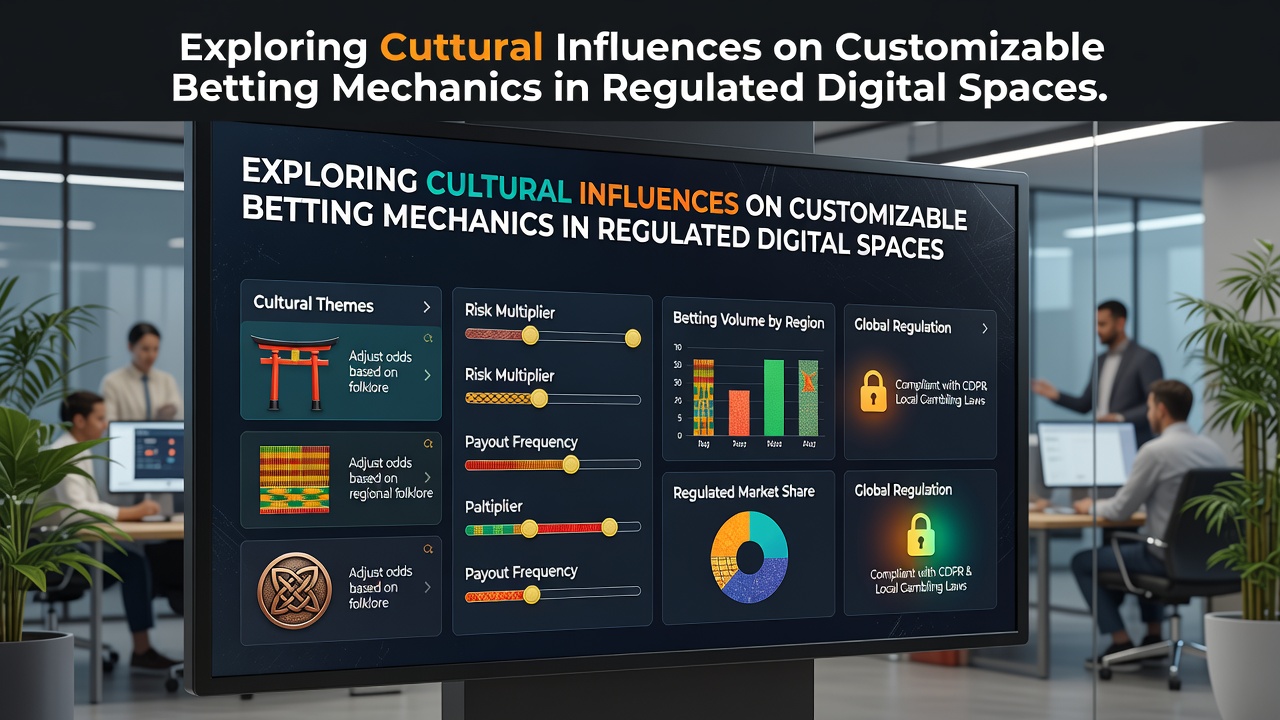
Exploring Cultural Influences on Customizable Betting Mechanics in Regulated Digital Spaces
Regulated digital spaces have expanded rapidly since the early 2020s, and customizable betting mechanics now reflect distinct cultural preferences across jurisdictions. Operators adjust bet limits, game variants, and payout structures to align with local norms while satisfying licensing requirements that took effect in multiple markets by August 2026. Data from regulatory filings indicate that European platforms often emphasize lower minimum stakes and extended session timers, whereas Asian markets favor higher volatility options tied to festival calendars and group play features.
Regional Preferences Shape Core Mechanics
North American regulators in states such as New Jersey and Pennsylvania require transparent customization sliders that let users set session budgets and loss limits before play begins. These controls emerged after participation surveys conducted between 2023 and 2025 showed higher engagement when players could mirror familiar bankroll habits from land-based venues. In contrast, Australian operators integrate customizable reel speeds and auto-spin intervals that echo the quick decision cycles common in pub-based gaming traditions.
European frameworks, including directives coordinated through the European Commission, mandate clear disclosure of return-to-player percentages that players can sometimes adjust within narrow bands. This flexibility accommodates cultural expectations around informed choice while maintaining overall house-edge boundaries. Observers note that Scandinavian markets further refine these tools by offering language-specific interfaces that reference local idioms for risk and reward.
Regulatory Updates in 2026 Drive Standardization
By August 2026 several Canadian provinces had synchronized iGaming rules that require platforms to store cultural preference data in encrypted profiles. These profiles allow mechanics such as multi-currency betting pools and community jackpot contributions to activate automatically when users select regional identifiers. Figures released by provincial gaming commissions reveal a 14 percent increase in session retention after these options rolled out in Ontario and British Columbia.
Similar patterns appear in Latin American jurisdictions where regulators now require that customizable bonus rounds reference national holidays and sporting events. The result is a set of mechanics that feel locally rooted rather than imported from generic templates.

Technology Enables Culturally Aligned Customization
Blockchain-based verification systems, already deployed in several licensed European and Asian markets, let operators prove that customization parameters remain within approved ranges. Smart contracts record each adjustment, creating an immutable audit trail that satisfies both cultural sensitivity reviews and financial reporting obligations. Research published by the University of Macau's gaming studies unit shows that players in Greater China regions respond positively when mechanics incorporate red-envelope style multipliers during Lunar New Year periods.
Payment integrations also adapt. Platforms serving Middle Eastern users often restrict certain high-volatility features during religious observance windows while expanding social pool options that align with communal decision-making traditions. These adjustments occur automatically through geofenced rule sets that update monthly according to published regulatory calendars.
Industry Data and Participation Trends
Participation reports compiled by the Canadian Gaming Association indicate that customizable live-dealer tables with culturally themed side bets saw a 22 percent rise in active users during the first half of 2026. European operators report parallel growth when mechanics allow players to toggle between single-hand and multi-hand formats that reflect bridge and poker club customs prevalent in specific countries.
Academic analyses from the Australian Gambling Research Centre further document how interface color palettes and sound cues, once customized, increase perceived fairness scores across demographic groups. These findings prompted several operators to embed A/B testing protocols that respect data-protection statutes while refining cultural alignment.
Conclusion
Customizable betting mechanics in regulated digital spaces continue to evolve through the intersection of technology, licensing requirements, and cultural expectations. As jurisdictions refine their frameworks after August 2026, operators maintain compliance by embedding region-specific parameters that respect both player habits and oversight mandates. The ongoing collection of participation data and regulatory filings provides the factual basis for understanding how these influences operate across global markets.