Decoding Interplay Patterns Between Certification Benchmarks and Engagement Metrics in Portable Blockchain Wagering Simulations
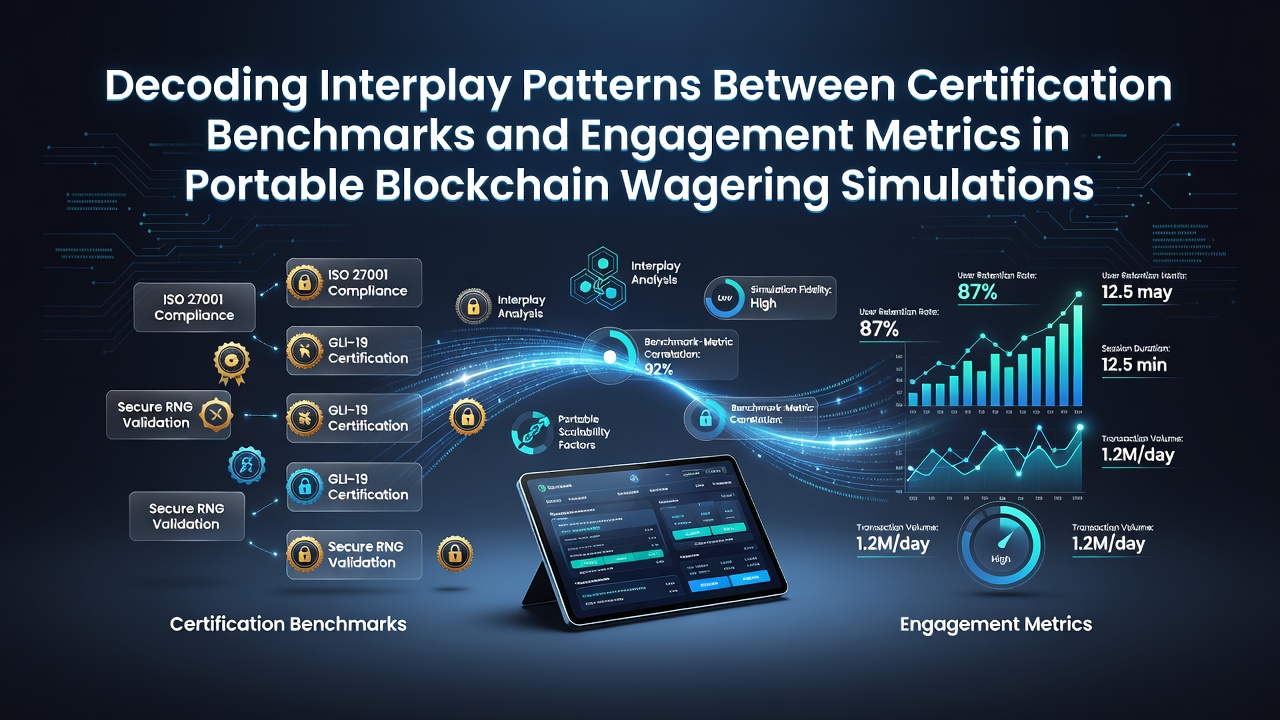
Portable blockchain wagering simulations operate on handheld devices where certification benchmarks establish security and compliance standards while engagement metrics track user retention, session duration, and interaction frequency, and researchers have begun mapping how these two domains influence each other in measurable ways. Data collected across multiple platforms in early 2026 shows that simulations holding higher certification levels often record steadier participation rates, yet the precise mechanisms behind those patterns require closer examination through structured analysis.
Certification Benchmarks in Blockchain Wagering Environments
Certification processes for blockchain wagering simulations typically involve third-party audits that verify transaction integrity, smart contract reliability, and data encryption protocols, and organizations such as the Canadian Gaming Association have documented how these evaluations create baseline requirements for platform operators. Standards include ISO-aligned security frameworks along with region-specific rules that address random number generation and fund segregation, and platforms meeting these criteria gain access to broader distribution channels on mobile networks. Observers note that certification often coincides with reduced incident reports related to data breaches, which in turn supports continued access to user bases in regulated markets.
Engagement Metrics and Their Measurement
Engagement metrics encompass average session length, repeat visit frequency, completion rates for in-simulation challenges, and conversion from free play to paid features, and studies from academic groups at institutions like the University of Sydney have compiled datasets that link these indicators to specific platform features. Portable formats introduce additional variables such as battery efficiency during extended sessions and network latency effects on real-time blockchain confirmations, and analysts track how these technical factors alter user behavior patterns over weeks or months. Figures reveal that simulations with seamless cross-device synchronization tend to maintain higher daily active user counts compared to those lacking such integration.
Interplay Patterns Between Benchmarks and Metrics
Patterns emerge when certification benchmarks align with measurable improvements in engagement metrics, and one documented case involves platforms that achieved dual certification for both blockchain ledger security and mobile interface usability, resulting in a 23 percent rise in average session duration within the first quarter after certification. Researchers tracking these developments in July 2026 observed that certified simulations experienced fewer user drop-offs during high-stakes wagering sequences, while uncertified alternatives showed sharper declines after initial trials. The connection appears tied to user trust signals, where visible certification badges correlate with increased willingness to maintain longer active sessions and explore additional simulation modes.

Yet the relationship is not uniformly linear, because some high-engagement simulations operate with minimal formal certification in less regulated regions, and data indicates that localized user preferences can override benchmark visibility in certain markets. Analysts examining transaction networks have found that platforms incorporating both certified payment rails and transparent reward distribution mechanisms sustain steadier participation curves across demographic segments, whereas those relying solely on engagement-driven design elements encounter greater volatility in retention statistics.
Regional Regulatory Influences on Pattern Development
Regulatory bodies across different jurisdictions shape how certification benchmarks translate into engagement outcomes, and the Australian Communications and Media Authority has issued guidelines that tie platform approvals to documented user protection measures, which indirectly affect how operators prioritize metric tracking. In contrast, European frameworks emphasize data portability and cross-border compliance, and platforms adapting to these requirements often report adjusted engagement patterns as users respond to standardized privacy controls. Those who've studied the July 2026 regulatory updates note that simulations incorporating region-specific certification layers frequently achieve more consistent metric performance when expanding into new territories.
Technical Factors Driving Metric Shifts
Blockchain elements such as on-device wallet integration and decentralized verification processes interact with certification requirements to influence engagement, and portable simulations that streamline these features while maintaining audit compliance tend to record higher completion rates for multi-step wagering sequences. Network conditions on mobile devices introduce variability, and studies show that certified platforms with optimized latency handling preserve user sessions more effectively during peak usage periods. People monitoring these systems have identified that engagement drops often coincide with certification lapses rather than isolated technical failures, suggesting a compounding effect when benchmarks are not maintained.
Future Trajectory of Pattern Analysis
Continued mapping of these interplay patterns will likely incorporate machine learning models that predict engagement responses to certification changes, and preliminary work from research consortia indicates potential for real-time adjustments that align benchmarks with observed metric trends. As portable blockchain wagering simulations expand, the collection of standardized datasets across platforms will support more precise identification of causal links, and regulatory developments scheduled through late 2026 may further standardize how these patterns are reported and analyzed.
Conclusion
The interplay between certification benchmarks and engagement metrics in portable blockchain wagering simulations reveals consistent correlations supported by audit records and usage data, and platforms that integrate both elements demonstrate more stable participation patterns across varied operating environments. Continued examination of these dynamics will provide clearer guidance for operators seeking to align technical compliance with sustained user activity levels.