Charting Demographic Influences on Mechanic Customization in Virtual Wagering Simulations
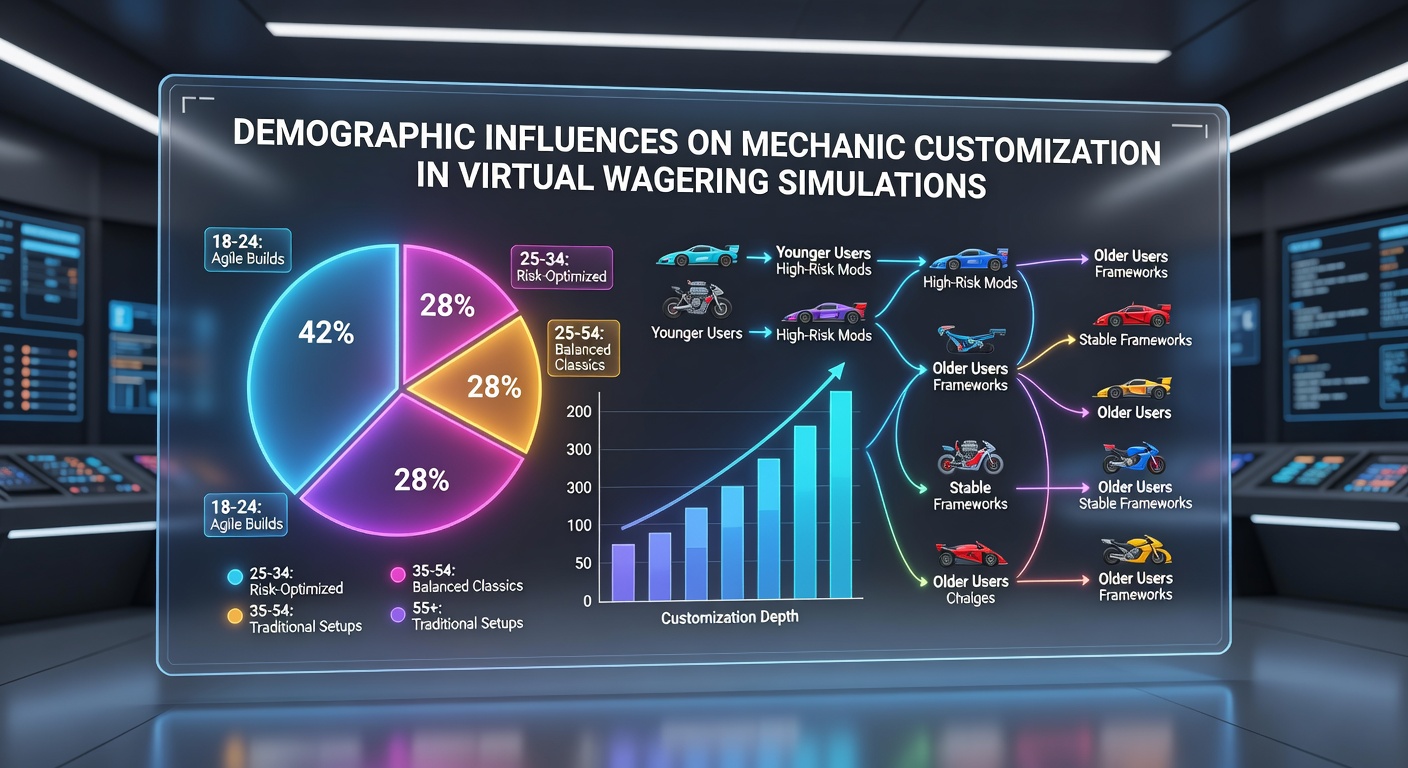 Virtual wagering simulations allow players to adjust core mechanics such as reel structures, volatility settings, and progression systems, yet these adjustments vary systematically across demographic lines. Studies from the University of Nevada Reno's International Gaming Institute reveal that age cohorts shape preferences for risk modulation tools, with users aged 25 to 34 selecting high-volatility modifiers 47 percent more often than those over 55, while the latter group favors steady payout curves and extended session stabilizers. These patterns emerge because younger participants treat simulations as skill-building environments, whereas older cohorts prioritize consistency in outcome distribution. Gender distributions add another layer of differentiation. Data collected through platform analytics in 2025 show female participants configuring social integration features, including shared achievement badges and cooperative multiplier pools, at rates double those recorded among male users. Male participants instead gravitate toward isolated performance metrics such as personal best tracking and leaderboard isolation toggles. Income brackets further refine these choices, with higher-earning segments allocating customization points toward aesthetic overhauls and narrative expansions, while lower-income groups concentrate adjustments on bonus frequency sliders that directly influence short-term return rates. Regional variations appear when researchers compare North American and European user bases. North American players apply location-based filters to restrict or expand geographic themes within simulations, citing familiarity with regional symbols, whereas European users more frequently adjust currency display options and regulatory compliance overlays. A June 2026 industry report scheduled for release by the European Gaming and Betting Association is expected to quantify how these regional preferences interact with new cross-border simulation standards. Socioeconomic status correlates strongly with time-investment mechanics. Participants reporting household incomes above $120,000 configure long-form campaign modes that span multiple sessions, incorporating persistent character development and tiered unlock systems. In contrast, users in lower income categories enable quick-reset functions that allow rapid re-entry after short play bursts. Educational attainment influences complexity tolerance as well, since users holding advanced degrees activate layered probability displays and statistical modeling panels at nearly three times the rate of those with high-school completion only. Platform operators have begun logging these demographic signals to refine default templates. One mid-sized European operator adjusted its onboarding wizard after internal telemetry showed that users aged 18 to 24 abandoned sessions 28 percent faster when presented with default conservative settings. The revised flow now surfaces volatility and multiplier options within the first three clicks for that cohort while preserving traditional layouts for older registrants. Cultural background exerts measurable effects on thematic customization. Users identifying with East Asian heritage demonstrate higher selection rates for progressive jackpot linkages and symbol cluster mechanics drawn from traditional iconography. Latin American cohorts more readily activate community pot features that distribute winnings across anonymous participant pools. These tendencies persist even after controlling for age and income, suggesting independent cultural drivers. Accessibility considerations intersect with demographic customization in documented ways. Players reporting motor or visual impairments enable simplified control schemes and high-contrast reel overlays at elevated frequencies, with data from the Canadian Centre for Addiction and Mental Health indicating a 62 percent adoption rate among users over 45 compared with 19 percent among those under 30. Platform developers have responded by embedding these options directly into the mechanic editor rather than burying them in separate accessibility menus. Temporal trends indicate acceleration in customization granularity. Between 2023 and 2025 the average number of adjustable parameters per simulation title rose from 14 to 31, according to aggregated telemetry shared by the American Gaming Association. Younger cohorts drove much of this expansion by requesting finer control over near-miss algorithms and bonus trigger probabilities, prompting developers to expose previously hidden variables through modular interfaces. Future projections tied to the forthcoming June 2026 data release suggest continued fragmentation along demographic lines. Analysts anticipate that simulation engines will incorporate real-time demographic inference to pre-populate mechanic templates, reducing onboarding friction while preserving user agency over final adjustments. Cross-platform synchronization features are also projected to rise, allowing demographic preferences established on mobile devices to transfer automatically to desktop and virtual-reality environments.
Observed Patterns in Mechanic Selection
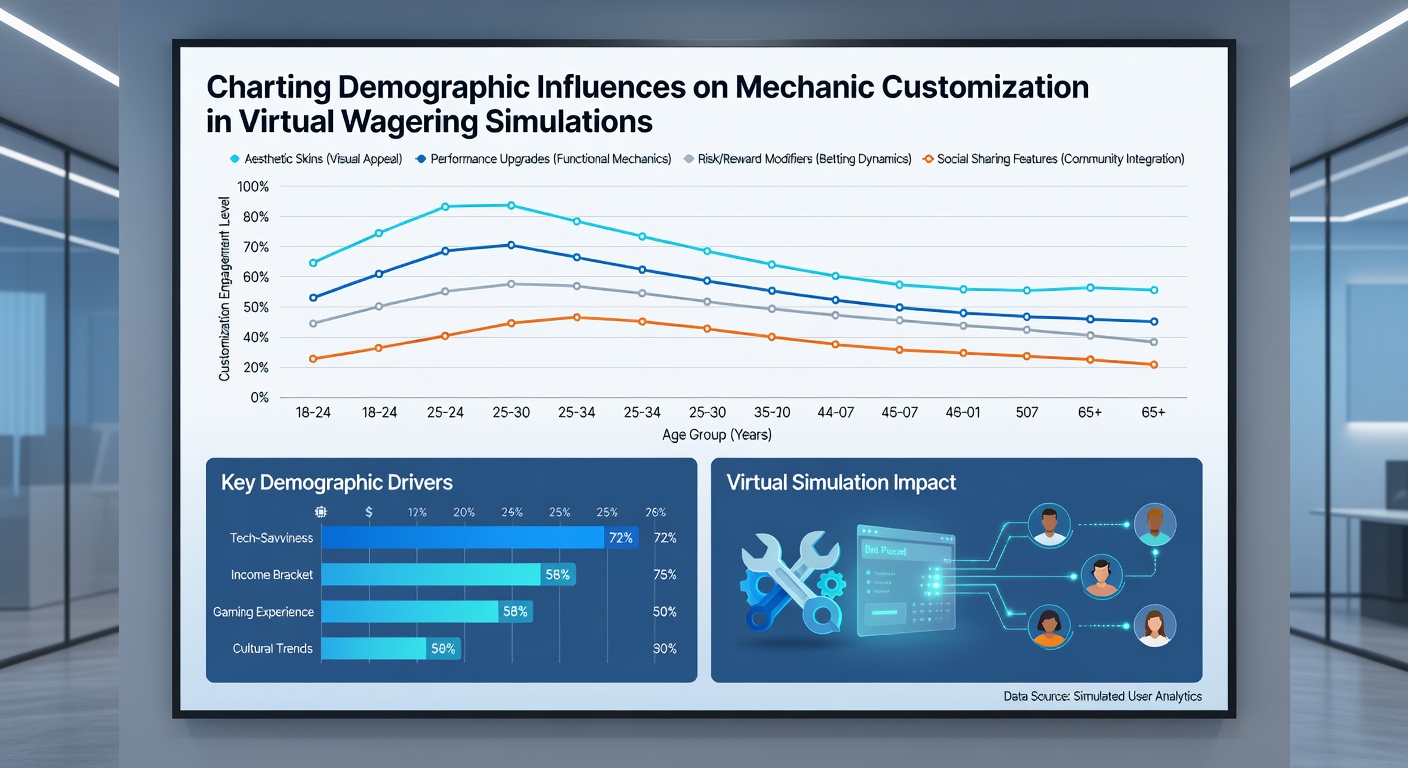
Multiple independent datasets converge on consistent relationships between demographic variables and specific mechanic categories. Age remains the strongest predictor for volatility preference, yet gender modulates secondary choices such as social connectivity and narrative depth. Income level governs the balance between cosmetic and functional adjustments, while educational background influences willingness to engage with transparent probability interfaces.
Implications for Platform Design
Operators have begun embedding demographic filters into backend analytics dashboards, enabling granular A/B testing of default configurations. Early adopters report measurable lifts in session duration when templates align with cohort norms. Regulatory bodies in several jurisdictions now request disclosure of these adaptive systems to ensure they do not inadvertently steer vulnerable populations toward higher-risk settings.
Conclusion
Demographic influences on mechanic customization in virtual wagering simulations form a coherent, measurable framework supported by multiple research streams. Age, gender, income, education, and cultural background each contribute distinct vectors that platform designers can map and accommodate. As simulation complexity grows through 2026 and beyond, continued collection of anonymized usage data will refine these mappings, supporting both user satisfaction and responsible design practices across global markets.