Certification Standards Transform Reward Customization in Blockchain Table Simulations on Mobile Devices

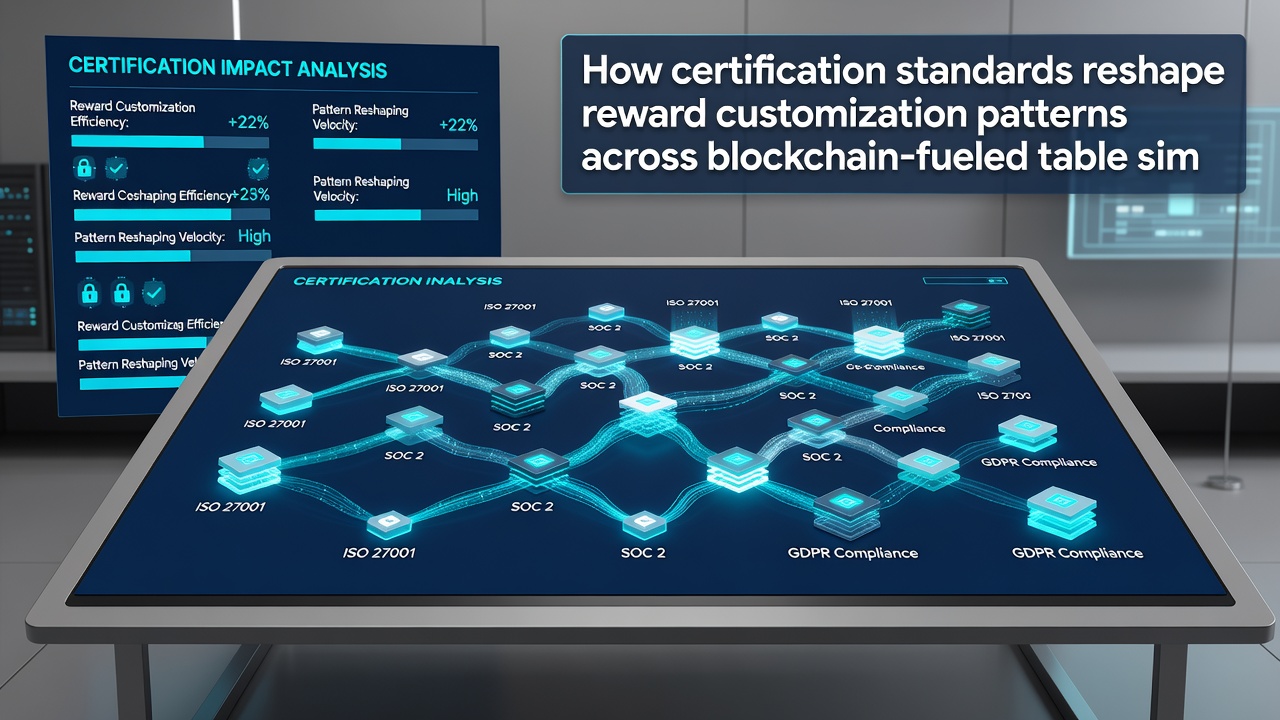
Certification standards have begun reshaping how developers build reward systems inside blockchain-fueled table simulations that run on portable devices, and the effects show up in everything from point allocation algorithms to player progression paths. Observers note that these benchmarks, which cover security protocols, fairness verification, and transaction transparency, force platforms to adjust customization options so they align with audited requirements rather than purely market-driven preferences. Research indicates that the shift started gaining momentum once multiple jurisdictions required third-party validation for any game using distributed ledger technology to handle in-app rewards.
Core Elements of Current Certification Frameworks
Standards bodies focus on three main areas when reviewing blockchain table simulations: cryptographic integrity of reward ledgers, randomness certification for card or dice mechanics, and compliance with data portability rules across mobile operating systems. Data from the International Association of Gaming Regulators shows that approved titles must demonstrate immutable audit trails for every reward adjustment, which means developers can no longer alter payout curves or loyalty multipliers without triggering a new review cycle. Those who've studied the process know that even minor tweaks to a VIP tier structure now require fresh cryptographic hashes and on-chain verification before deployment.
Yet the rules also create opportunities for new forms of customization. Platforms that meet the benchmarks can offer players granular control over how rewards convert between on-chain tokens and in-game credits, provided the conversion logic passes automated compliance checks. Figures reveal that such flexibility appears most often in titles certified after 2024, when updated testing suites began allowing conditional reward branching based on player-selected risk profiles.
Impact on Reward Customization Patterns
Developers report that reward customization now follows a narrower set of templates because certification demands consistent payout ratios across all device types. A simulation running on both flagship tablets and older smartphones must deliver identical reward probabilities once the certification stamp is applied, which eliminates certain device-specific bonus multipliers that existed in earlier versions. Analysts tracking adoption rates note that this uniformity has pushed designers toward modular reward engines where players select from pre-approved customization layers instead of building entirely bespoke structures.
Blockchain Integration and Mobile Constraints
Portable devices introduce unique challenges for blockchain table simulations, particularly around latency during reward settlement and storage limits for full ledger copies. Certification standards address these issues by requiring lightweight verification methods that still maintain auditability, such as zero-knowledge proofs for balance checks. According to reports from the Gaming Standards Association, titles passing these tests show reward redemption times averaging under three seconds on 5G networks while still logging every transaction to the main chain. This balance allows deeper customization options, like tiered loyalty multipliers tied to on-chain activity streaks, without violating mobile performance thresholds.
Regional Regulatory Influences Emerging in 2026
By June 2026 several North American and European regulators are expected to align their certification checklists more closely, which could standardize how reward customization appears across borders. The Malta Gaming Authority and the Nevada Gaming Control Board have both signaled plans to accept mutual recognition of certain technical audits, reducing the need for duplicate testing on the same title. Industry observers point out that this alignment would let developers roll out reward features faster in multiple markets while maintaining the same customization parameters. Research from academic groups studying distributed ledger applications in gaming suggests that such harmonization correlates with a measurable uptick in player retention metrics once reward systems become more predictable across regions.
Take one certification round completed in early 2025 where a major studio adjusted its table simulation reward engine to satisfy new cryptographic requirements; the changes resulted in players gaining the ability to lock portions of their earned tokens into time-bound smart contracts, a feature previously unavailable because it had not passed fairness audits. Similar adjustments continue to surface as testing protocols evolve.
Future Trajectories for Customization Under Certification
Certification benchmarks continue to evolve toward greater emphasis on player-controlled parameters, provided those parameters remain within verified mathematical boundaries. Developers who meet the latest suites can introduce reward pools that adjust dynamically based on aggregate on-chain behavior across all portable sessions, yet each individual customization choice must still map to an approved formula. Data shows that platforms adopting these controlled-flexibility models experience fewer post-launch certification delays compared with those attempting fully open-ended reward builders. The pattern suggests that future updates will likely expand the menu of pre-certified customization modules rather than relax the underlying verification standards themselves.
Conclusion
Certification standards have established clear boundaries around reward customization in blockchain-fueled table simulations on portable devices while simultaneously enabling new, auditable forms of player choice. As regulatory bodies move toward greater alignment by mid-2026, developers face both constraints and structured opportunities that shape how rewards are offered, tracked, and redeemed. The resulting systems prioritize verifiable fairness alongside mobile performance, producing customization patterns that differ markedly from earlier, less regulated approaches.